Stand Alone Service Type:
Make Sure Google Can Find Your Clients' Most Important Pages
White-labeled XML sitemap audit, strategic architecture, automated generation setup, and Search Console submission — per client site, under your agency brand.
Most client sitemaps are bloated, poorly structured, or simply wrong. Redirected URLs, noindexed pages, and 404s sitting in sitemaps alongside the pages that actually matter — sending conflicting signals to Google and wasting crawl budget on content that should never have been included. A properly structured sitemap tells Google exactly which pages to prioritise and when they were last updated, making it one of the quickest wins available in technical SEO. We audit the existing sitemap, strip out everything that shouldn’t be there, rebuild the architecture for the client’s content types, and submit the clean version to Search Console — all white-labeled under your agency brand.
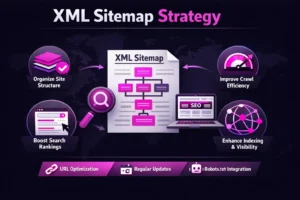
A well-planned XML sitemap strategy ensures that search engines can easily locate your most valuable pages, especially on large websites or sites with complex structures. While search engines can typically discover pages through internal links, an XML sitemap provides an additional layer of clarity and organization that improves crawl efficiency. This is particularly helpful for newly launched pages, pages that may not be heavily linked internally, or content buried deeper within the site architecture.
Another benefit of a strong XML sitemap strategy is improved indexation. By prioritizing important URLs and excluding low-value or duplicate pages, you help search engines focus their crawl budget on the content that matters most. This increases the likelihood that your key pages will appear in search results and perform well in organic search.
Regularly maintaining your XML sitemap is also essential. Removing outdated URLs, adding newly published content, and ensuring only canonical pages are included keeps your sitemap clean and effective. When paired with tools like Google Search Console, an optimized XML sitemap strategy helps monitor indexing status, identify errors, and maintain a technically healthy website that performs better in search engines.
For more details on how sitemaps help search engines discover and index content, review the official guidance from Google Search Central on XML sitemaps.
What XML Sitemap Strategy Service Includes
XML sitemaps guide search engines to your content—but poorly structured sitemaps can do more harm than good. Bloated sitemaps with low-value URLs waste crawl budget. Missing sitemaps leave important pages undiscovered.
This service builds clean, strategic sitemap architecture tailored to your site’s priorities.
Order this for clients who:
– Have large sites where the sitemap has grown messy over time and has never been properly audited
– Have Search Console showing sitemap errors — submitted URLs not indexed, redirect errors, or sitemap not accessible
– Run e-commerce stores where product sitemap structure needs separating from blog and category content
– Have multiple content types that would benefit from separate sitemaps (products, blog posts, location pages, videos)
– Have never had a proper sitemap setup — using only the basic auto-generated version their CMS creates without any strategic oversight
– Are about to launch new content and want to ensure it will be discovered quickly
What We Deliver For Your Client
Current Sitemap Audit
– Full audit of all existing XML sitemaps on the client’s site
– Bloat identification — every URL that shouldn’t be in the sitemap flagged and removed
– Missing priority URL identification — important pages not currently included
– Error audit: 404s, redirected URLs, and noindexed pages currently sitting in the sitemap sending conflicting signals to Google
Strategic Sitemap Architecture
– Separate sitemaps created for each of the client’s content types — products, blog, locations, services — so Google can prioritize each independently
– Priority and lastmod tags implemented to signal page importance and freshness
– Sitemap index architecture designed for large sites — ensuring all sitemaps are discoverable from a single entry point
– Every architectural decision documented in a white-labeled sitemap strategy document your agency can present to the client
Template-Specific Optimization
– Product sitemaps with availability and pricing data
– News sitemaps for time-sensitive content
– Image and video sitemaps where applicable
– Mobile sitemap specifications
Automated Sitemap Generation
– Dynamic sitemap generation configured for the client’s CMS or e-commerce platform — so the sitemap updates automatically when new content is published
– Automatic sitemap updates set up so new product pages, blog posts, and location pages appear in the sitemap without manual intervention
– Sitemap splitting implemented for sites exceeding 50,000 URLs — ensuring Google can process the full content inventory efficiently
Search Console Integration
– All optimized sitemaps submitted to the client’s Google Search Console and confirmed as processing without errors
– Sitemap processing monitoring — any submission errors identified and resolved
– Indexation rate tracking for sitemap URLs — documented in the white-labeled report so your agency can show the client the improvement over time
Deliverables
What your agency receives — ready to present to your client:
– White-labeled sitemap audit report showing what was found, what was removed, and what was added
– Clean, validated XML sitemap(s) live on the client’s site
– Sitemap architecture documentation explaining the structure and rationale — formatted for client presentation
– Search Console submission confirmation with processing status
– Automated update setup instructions for the client’s development team (where applicable)
– Ongoing monitoring checklist your agency can use in future client reviews
FAQs
Common Questions
Auto-generated sitemaps are a starting point, not a strategy. Most CMS-generated sitemaps include everything the platform produces by default — tag pages, author archives, filtered category URLs, paginated pages, noindexed pages, and redirected URLs — none of which should be in a sitemap. They also rarely separate content types into individual sitemaps or implement lastmod tags meaningfully. An auto-generated sitemap tells Google "here is everything" — a strategically built sitemap tells Google "here is what matters and when it was last updated." The difference in crawl efficiency and indexation speed is significant.
The clearest signals are sitemap errors in Google Search Console — submitted URLs returning 404s, redirect errors, or "submitted URL has noindex tag" warnings. Beyond outright errors, a bloated sitemap containing hundreds of low-value URLs alongside priority pages can dilute the crawl signal and slow indexation of new content. If a client regularly publishes new pages or products that take weeks to appear in search results, sitemap structure is one of the first places to investigate.
We need appropriate access to the client's CMS or hosting environment to create, replace, or configure the sitemap files, along with access to their Google Search Console property for submission and monitoring. All access requests go through your agency — we never contact the client directly. For platforms with plugin-based sitemap generation (WordPress with Yoast or RankMath, for example), we typically work through the plugin settings rather than manually editing sitemap files.
For most modern CMS platforms, yes — and we set this up as part of the service. Dynamic sitemap generation means new pages, products, and posts are automatically added to the appropriate sitemap when they're published, without any manual intervention. For static or custom-built sites, we document the process the client's developer needs to follow to keep the sitemap updated, and we include a monitoring checklist so your agency can spot when the sitemap falls out of sync with the live site.
Submitting a clean sitemap to Google Search Console typically accelerates the discovery of new and updated URLs within a few days — Google processes newly submitted sitemaps relatively quickly. However, actual indexation of those pages depends on their individual quality signals, crawl budget, and competition for crawl attention. Pages that were previously blocked by sitemap errors or buried amongst low-value URLs will generally be crawled more efficiently once the sitemap is clean, but the full indexation improvement plays out over weeks rather than days.
XML Sitemap Strategy Pricing
Often bundled with Crawl Budget Optimization — natural pairing.
Basic
4-5 hrs
$300
- Sitemap audit (errors, noindex URLs, redirects)
- Sitemap cleanup recommendations
- Resubmission to Search Console
- Indexation status check
Standard
7-9 hrs
$600
- Everything in Basic
- Sitemap restructure & implementation
- Priority page hierarchy strategy
- Image/video sitemap review
- Monitoring setup
Premium
11-14 hrs
$1050
- Everything in Standard
- Large site sitemap architecture (10k+ URLs)
- Sitemap index file buildout
- Crawl rate analysis
- 30-day indexation tracking
Ready to Add Technical SEO and AI Optimization to Your Service Menu?
Book a free 30-minute partner strategy call. We’ll walk through your client roster, identify which services fit, show you the AI Analytics Platform live, and confirm pricing. No obligation.
