
Welcome to Harper Media Group
Give Your Clients The Schema Foundation That Makes Everything Else Work
White-labeled JSON-LD schema implementation across every page template — delivered per client site, under your agency brand, at wholesale pricing.
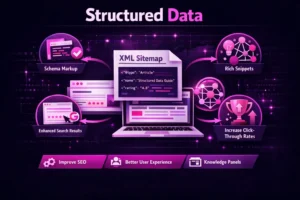 Schema markup is one of the most consistently underdelivered services in agency SEO. Most clients have either no structured data, generic plugin-generated markup that misses the nuances of their business model, or outdated schema that creates validation errors in Search Console. We implement custom JSON-LD schema across every relevant page template on your client’s site — Organization, Product, Service, LocalBusiness, Article, FAQ, and more — validated, tested, and documented in a white-labeled report your agency can present directly to the client.
Implementing structured data is vital because it can enhance how your pages appear in search results through rich snippets, knowledge panels, and other enhanced features. These improvements make listings more informative and visually appealing, which can increase click-through rates, improve visibility, and help your content stand out in competitive search results.
Schema markup that makes your clients' content readable by every major search engine and AI platform.




Why Schema Markup Is Your Competitive Advantage
Stand Out in Search Results
While your clients' competitors show up as plain text, clients with proper schema can display star ratings, pricing, FAQs, and breadcrumbs. Rich results get more clicks — and schema is what makes them possible.
Speak AI's Language
ChatGPT, Google AI Overviews, and Perplexity rely on structured data to identify and recommend businesses. Schema is what turns your client from unstructured text into a citable, verified entity.
Get Featured Faster
Knowledge Panels, rich snippets, and enhanced SERP features all require proper schema implementation. Your agency can now deliver this for any client — without a schema specialist on your team.
Build Entity Authority
Schema connects your client's business to related topics, locations, and concepts — building the E-E-A-T signals that establish long-term authority in competitive niches.
How We Deliver Schema Implementation Under Your Agency Brand
Phase 1: Schema Audit & Discovery
Existing Review
- Full audit of all existing schema markup on the client's site — plugin-generated, theme-level, and hardcoded
- Validation of every schema type using Google's Rich Results Test
- Error and warning identification in Search Console's enhancement reports
- Conflicting or duplicate markup detection — common on sites with multiple schema plugins
- Missing entity definitions identified — the gaps between what the client has and what their business model requires"
Structured Opportunity Mapping
- Page type classification (Homepage, Products, Services, Articles, etc.)
- Template-level schema needs assessment
- Priority schema types based on your business model
- Rich result eligibility analysis
- Competitor schema benchmarking
Phase 2: Strategy & Architecture
Core Entity Definition
We establish your fundamental business entities:
- Organization or LocalBusiness – Your company's official schema identity
- Website – Site search, navigation, and identity markup
- Primary Service/Product Categories – What you actually offer
Template-Level Schema Planning
Custom schema design for each page template:
- Homepage → Organization/LocalBusiness + Site navigation
- Service Pages → Service schema with provider details
- Product Pages → Product schema with offers, reviews, availability
- Blog/Articles → Article or BlogPosting with author and publisher
- Location Pages → LocalBusiness with address, hours, geo-coordinates
- FAQ Pages → FAQPage schema for instant SERP answers
- Events → Event schema with dates, tickets, performers
- Reviews → AggregateRating and Review markup
Phase 3: JSON-LD Implementation
Why We Use JSON-LD
We exclusively use JSON-LD (JavaScript Object Notation for Linked Data) because:
- It's Google's preferred format
- It's easy to validate and maintain
- It doesn't interfere with page rendering
- It's platform-agnostic and future-proof
For WordPress Sites
- Custom code in theme functions
- Schema plugin configuration (Yoast, RankMath, Schema Pro)
- Advanced Custom Fields (ACF) integration for dynamic data
- Custom Post Type schema automation
For Shopify/E-commerce
- Liquid template integration
- Product, Offer, and AggregateRating markup
- Breadcrumb and navigation schema
- Organization and WebSite markup
For Custom/Enterprise Sites
- Direct JSON-LD injection via CMS
- Server-side rendering for dynamic content
- API integration for product/service data
- Scalable schema generation for thousands of pages
Phase 4: Dynamic Schema & Content Mapping
Automated Schema Generation
For sites with hundreds or thousands of pages, we set up dynamic schema systems:
- Product feeds → Product schema with real-time pricing and availability
- Service categories → Service schema with variable descriptions
- Author pages → Person schema with credentials and articles
- Location data → LocalBusiness schema with operating hours and contact
Rich Content Enhancement
Where appropriate, we layer additional schema:
- HowTo markup for instructional content
- Video object markup for embedded videos
- Recipe markup for food/cooking content
- Job posting markup for career pages
- Course markup for educational content
Phase 5: Validation & Monitoring
Schema Testing
- Rich Results Test validation for every template
- Schema.org validator checks
- Search Console enhancement report monitoring
- Real-world SERP testing to confirm rich results
Ongoing Schema Health
- Monthly enhancement report review
- Schema error and warning resolution
- Schema deprecation monitoring (Google changes requirements regularly)
- Quarterly schema updates based on new opportunities
Comprehensive Schema Coverage for Every Business Model
Business & Organization
- Organization
- LocalBusiness (+ all subtypes: Restaurant, MedicalBusiness, etc.)
- Corporation
- Brand
Products & Services
- Product
- Service
- Offer
- AggregateOffer
Content & Publishing
- Article
- BlogPosting
- NewsArticle
- WebPage
- VideoObject
Reviews & Ratings
- Review
- AggregateRating
- Rating
Navigation & Structure
- BreadcrumbList
- SiteNavigationElement
- WebSite
- SearchAction
Specialized Content
- FAQPage
- HowTo
- Recipe
- Event
- Course
- JobPosting
People & Roles
- Person
- Author
- Employee
SCHEMA FOR AI DISCOVERY
Schema's Critical Role in AI-Powered Search
Google’s AI Overviews, ChatGPT search, and other generative AI platforms rely heavily on structured data to:
- Identify authoritative sources – Proper schema establishes your legitimacy
- Extract specific facts – Clean entity definitions make you quotable
- Understand relationships – Schema connects your business to topics and locations
- Surface in recommendations – AI systems prioritize well-structured content
Think of schema as your client’s resume for AI. Without it, they’re unstructured text — invisible to AI recommendation engines. With it, they become a verified, citable entity that AI platforms can surface confidently. Every client you add schema to is a client better positioned for the AI search landscape that already exists.
FAQs
Common Questions About Technical SEO
Schema is not a direct ranking factor, but it works indirectly in ways that matter. Properly implemented structured data increases click-through rates via rich results, establishes entity authority that reinforces E-E-A-T signals, and makes content more understandable to both search engines and AI platforms. For clients in competitive niches, these indirect effects compound significantly over time. For clients appearing in AI Overviews and ChatGPT responses, schema is increasingly a prerequisite rather than an enhancement.
For smaller client sites with five to ten page templates, implementation typically takes six to eight hours. Complex sites with many content types, dynamic content, or multi-location requirements can take twenty to thirty or more hours. We scope every project individually before starting and confirm timelines with your agency upfront. All work is delivered in a white-labeled report your agency can present to the client on completion.
Almost certainly yes. Plugins like Yoast SEO and RankMath generate basic, generic schema that covers the most common types but doesn't reflect the specifics of a client's business model. They typically miss Organization-level entity definitions, don't handle multi-location schema correctly, don't implement product or service schema with real business data, and can create conflicting markup when multiple plugins are active. We audit what the plugin is generating, identify the gaps, and implement custom JSON-LD that complements or replaces the plugin output where needed.
Schema standards and Google's rich result eligibility criteria evolve regularly — new types are introduced, old types are deprecated, and validation requirements change. We monitor these updates as part of ongoing subscription plans and notify your agency when a client's schema needs updating to remain compliant. For one-time implementation projects, we include documentation of the schema types deployed so your agency knows what to review if Search Console starts showing enhancement errors in future.
We track rich result eligibility through Google Search Console's enhancement reports, validate every template with Google's Rich Results Test, and monitor the live SERPs for evidence of structured features appearing in search results. All of this is documented in a white-labeled report showing before and after — which schema types are now eligible for rich results, which enhancement reports show improvements, and where rich results have begun appearing in search. Your client can see exactly what changed and why it matters.
PROCESS TRANSPARENCY
What to Expect When Working With Us
Maximize Your Visibility with Combined Schema & Vector Embedding
The most powerful combination for your clients is schema plus vector embedding. Schema tells AI systems what the client is. Vector embeddings ensure their content gets recommended. Together, they make your client a fully AI-ready entity that search engines and AI platforms can identify, understand, and surface with confidence.
Our combined package includes:
- Complete schema implementation
- Content vectorization for AI discovery
- Entity clustering and topic alignment
- Internal linking strategies based on semantic relationships
- Ongoing monitoring for both structured data and AI citation
Structured Data & Schema
Project-based pricing per client site — billed to your agency at wholesale
Schema Essentials
Local & service businesses, first-time schema
$450
/ site
Includes Everything You Need:
- Organization or LocalBusiness
- Website schema
- 3–5 page templates
- Validation + error cleanup
6-10 hrs
Schema Pro
Multi-location, e-commerce, content publishers
$950
/ site
Includes everything in Essentials, plus:
- Service/Product schema
- Article + FAQ/HowTo schema
- Dynamic schema automation
- Enhancement report setup
12-18 hrs
Schema Elite
Enterprise, media-rich, complex multi-entity
$1800+
/ site
Includes everything in Pro, plus:
- Multi-entity architecture
- Video, Image, AggregateRating
- Advanced dynamic schema file
- Quarterly review + schema playbook
25-35 hrs
Agency Retainer Plans
Monthly volume pricing for agencies
Starter
1-4 sites
$1800
/ mo
- Dedicated Hours - 40 hrs
- Estimate cost per site $450-$1800
- Savings VS A La Carte: 10%
Growth
5-10 sites
$3800
/ mo
- Dedicated Hours - 80 hrs
- Estimated cost per site $380-$760
- Savings VS A La Carte - 20%
Scale
10-15 sites
$5400
/ mo
- Dedicated Hours - 120 hrs
- Estimate cost per site $360-$540
- Savings VS A La Carte - 25%
Ready to Add Technical SEO and AI Optimization to Your Service Menu?
Book a free 30-minute partner strategy call. We’ll walk through your client roster, identify which services fit, show you the AI Analytics Platform live, and confirm pricing. No obligation.