
The Technical Audit Process for International Sites: A White-Label Agency Framework
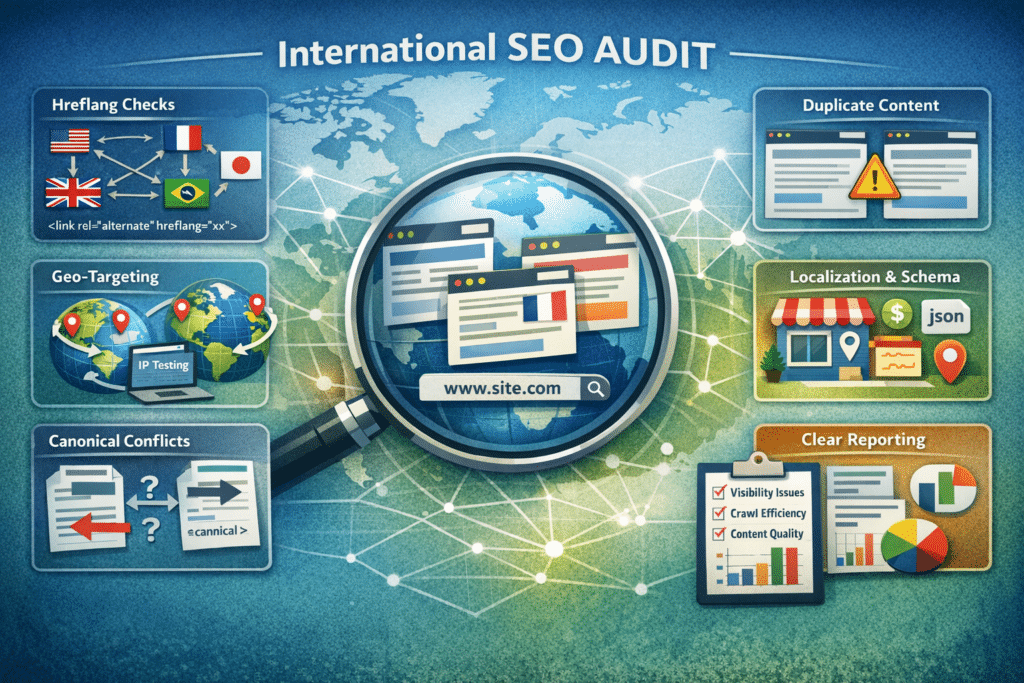
International SEO audits tend to be some of the most complex work an agency can take on. Once you’re dealing with multiple countries, languages, and site versions, the usual technical audit checklist isn’t enough. You’re no longer just checking a single site — you’re managing a network of versions that all need to stay aligned. That’s where things like hreflang, duplicate content risks, and crawl behavior across regions start to matter a lot more, and the reporting has to be clear enough that clients can actually understand what’s going on beneath the surface.
Expanding the Standard Audit for International Scope
A typical technical SEO audit might cover things like crawlability, indexability, on-page structure, and performance across roughly 80 checkpoints. An international audit builds on that foundation, but applies it separately to each country or language version of the site.
One of the biggest areas is hreflang validation. Instead of checking it once, each language version needs to be crawled and verified on its own. That includes confirming self-referencing tags, making sure every version properly points to its counterparts, ensuring canonical URLs match the hreflang URLs, verifying the presence of an x-default version, and checking that language codes follow the correct format (like en-gb, where consistency actually matters in implementation).
Another common issue is conflicts between canonical tags and hreflang signals. If a page is marked with hreflang but its canonical tag points somewhere else, Google will usually prioritize the canonical and ignore the hreflang entirely. That can lead to entire language versions not showing up in the markets they’re meant for, even if everything else looks correct on the surface.
Geo-targeting adds another layer of complexity. Many international sites use CDNs or server-side logic to serve different content depending on a visitor’s location. The problem is that Googlebot typically crawls from a limited set of locations, so what it sees may not match what users in other countries see. A proper audit tests from multiple geographic IPs to confirm that Google is being served the same version that local users are intended to see.
Finally, structured data needs to be treated on a per-market basis. Each physical location should have its own properly configured LocalBusiness schema with the correct country and contact details. Organization-level schema should reflect the right regional profiles and references for each market, and things like pricing should be localized through the correct currency markup.
Reporting International Audit Findings to Agency Clients
International SEO audit reports come with a communication challenge that you don’t really see in standard audits. The technical issues are often more complex, and they don’t translate easily for non-technical stakeholders. It’s easy for a client to understand something like “you have broken links,” but much harder for them to interpret something like “your hreflang annotations are missing reciprocal references for the fr-ca version.”
Because of that, the way you structure the report matters just as much as the findings themselves.
The most effective approach is to group issues by impact rather than by technical category. Instead of organizing everything under headings like “hreflang” or “indexing,” it works better to separate findings into how they affect the site: visibility issues, crawl efficiency issues, and content quality issues. That framing immediately makes it clearer why something matters.
Within each issue, it also helps to keep a consistent structure. You want to clearly show which pages are affected, explain in plain language what Google is actually doing because of the issue, outline the technical fix, and include an estimate of the effort required to resolve it. This separation is important — especially keeping the “what’s happening in Google” explanation distinct from the “how to fix it” — because it makes the report usable for both sides of the audience: decision-makers and developers.
For white-label agencies, this structure has an additional benefit. It reduces the need for the partner agency to deeply understand every technical detail, especially around complex areas like hreflang. The report effectively carries the technical explanation, allowing the agency to stay focused on client communication, project management, and overall delivery while still presenting the work as highly credible and expert-driven.
