
How a Technical SEO Audit Uncovers and Resolves Indexing Gaps
People often talk about AI search like it’s a completely new discipline that replaces traditional SEO. In reality, it’s much closer to an extension of what already works.
The same technical SEO fundamentals that help Google crawl, understand, and rank a site are still doing most of the heavy lifting in AI-driven search. If anything, AI systems rely on those signals even more because they’re pulling from the same structured, accessible web content.
What changes is not the foundation, but the layer on top. AI search adds extra requirements, but it doesn’t cancel out or replace the basics — it builds on them.
Once you understand that AI visibility depends on solid technical SEO first, it becomes clearer how agencies should prioritize their work and how they should explain its value. The path to being visible in AI search still starts with getting the fundamentals right.
The Technical SEO Signals That Transfer Directly to AI Visibility
Page speed and Core Web Vitals still matter just as much in AI search as they do in traditional SEO. Systems like Google AI Overviews, ChatGPT Search, and Perplexity rely on web crawlers that need to quickly access and reliably load pages. If a page is slow or unstable, it’s less likely to be crawled frequently — or at all. Metrics like Largest Contentful Paint (LCP) are still strong indicators of how easily and consistently a page can be retrieved.
Clean HTML structure also plays a bigger role than people often assume. AI systems don’t “see” pages the way humans do — they read the underlying HTML. Pages built with clear, semantic markup and proper heading hierarchy (H1, H2, H3) are much easier to interpret and extract information from. When content is buried inside heavy JavaScript, complex components, or non-text elements, it becomes harder for these systems to reliably understand and use it.
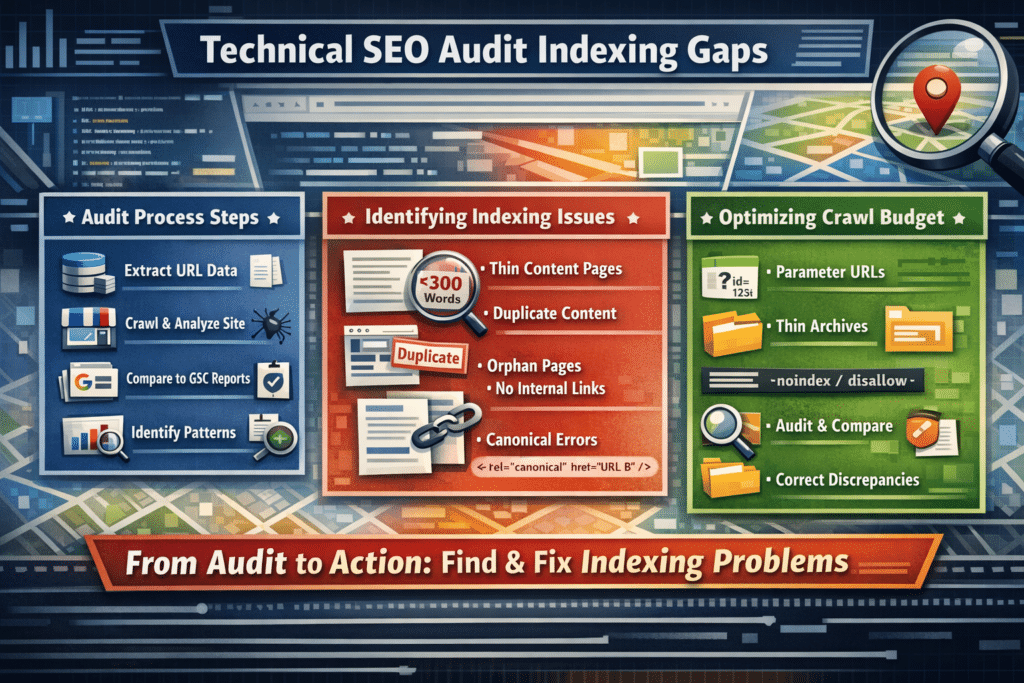
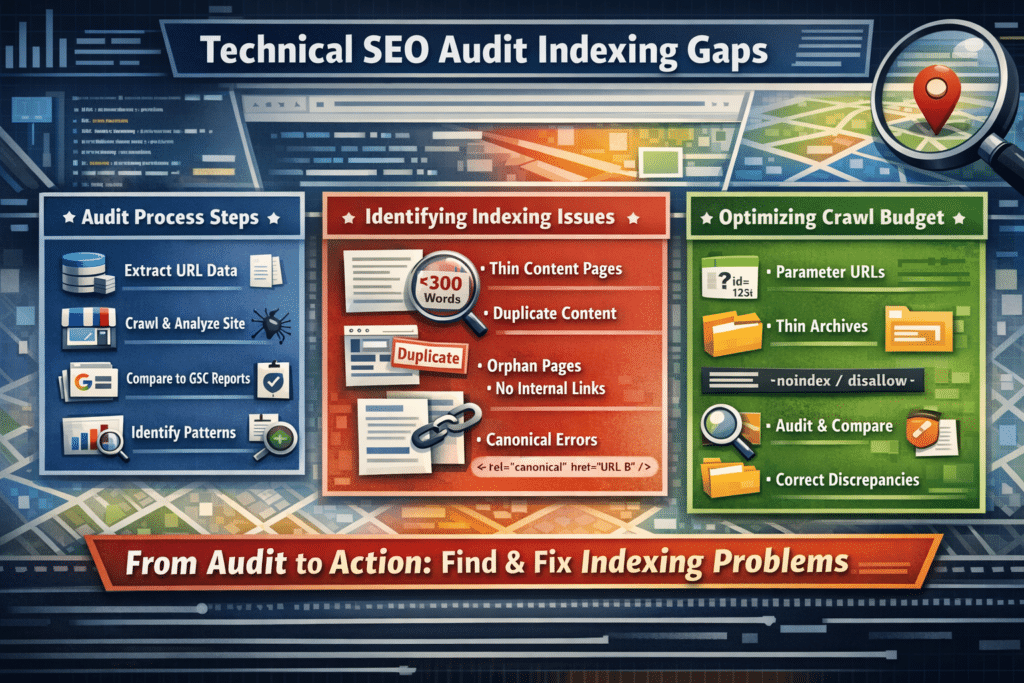
Canonical URLs are another quiet but important factor. AI systems need to know which version of a page is the “official” one. Without proper canonical tags, the same content can appear under multiple URLs, which creates confusion and inconsistency in what gets indexed or cited. When canonicalization is handled correctly for traditional SEO, it naturally supports AI retrieval as well.
Internal linking ties everything together. The way pages connect to each other signals importance and context. Pages that are consistently linked from other strong, relevant pages tend to be crawled more often, indexed more reliably, and referenced more in AI-generated answers. A well-structured internal linking system — especially one built around topic clusters — supports both search rankings and AI visibility at the same time.
The Additional Layer: What AI Systems Need Beyond Traditional Technical SEO
One of the most basic requirements for AI visibility is making sure you’re not accidentally blocking AI crawlers. Systems like GPTBot (used for ChatGPT), PerplexityBot, ClaudeBot, and Google’s AI-related crawlers all follow robots.txt rules. If your robots.txt file is too restrictive — for example, using a broad Disallow: / or blocking unfamiliar bots by default — you may be shutting these systems out entirely without realizing it.
Speakable schema is one of the more direct ways to influence how AI systems select and cite content. Originally designed for voice assistants, it works by marking specific sections of a page as “best for reading aloud.” In practice, that aligns closely with how AI systems choose passages to quote. While not widely used yet, it’s one of the few structured signals that explicitly tells systems which content is most important.
There’s also an emerging standard called llms.txt, which works a bit like a curated guide for AI systems. Instead of forcing crawlers to figure out your site on their own, it provides a simple, human-defined index of the most important pages. For large or complex sites, this helps AI systems prioritize what actually matters instead of guessing.
Beyond specific files or schema, structure at the paragraph level matters a lot. AI systems don’t cite entire pages — they pull specific passages. That means content needs to be written in clear, self-contained chunks. Each paragraph should ideally make one point, start with a clear idea, and not rely heavily on surrounding text to make sense.
From an audit perspective, this changes how you evaluate pages. It’s no longer just about whether a page is “optimized,” but whether individual passages are usable on their own. If a key statement only makes sense after reading multiple paragraphs, it’s far less likely to be selected or cited by an AI system.
Additional Resources: How to Appear in Chatgpt Search Results, Optimizing for AI Search Engines, Structured Data, Search Engine Optimization (SEO) Starter Guide
